The formula base
Start with the base of the formula and the ingredients responsible for cleansing. Look at the formulation as a whole instead of judging it by one highlighted ingredient.
THE ENGLISH GUIDE TO HAIR & SCALP
A plant-science researcher explains how to look at ingredients, hair and scalp fundamentals, and your own observations before choosing a shampoo.
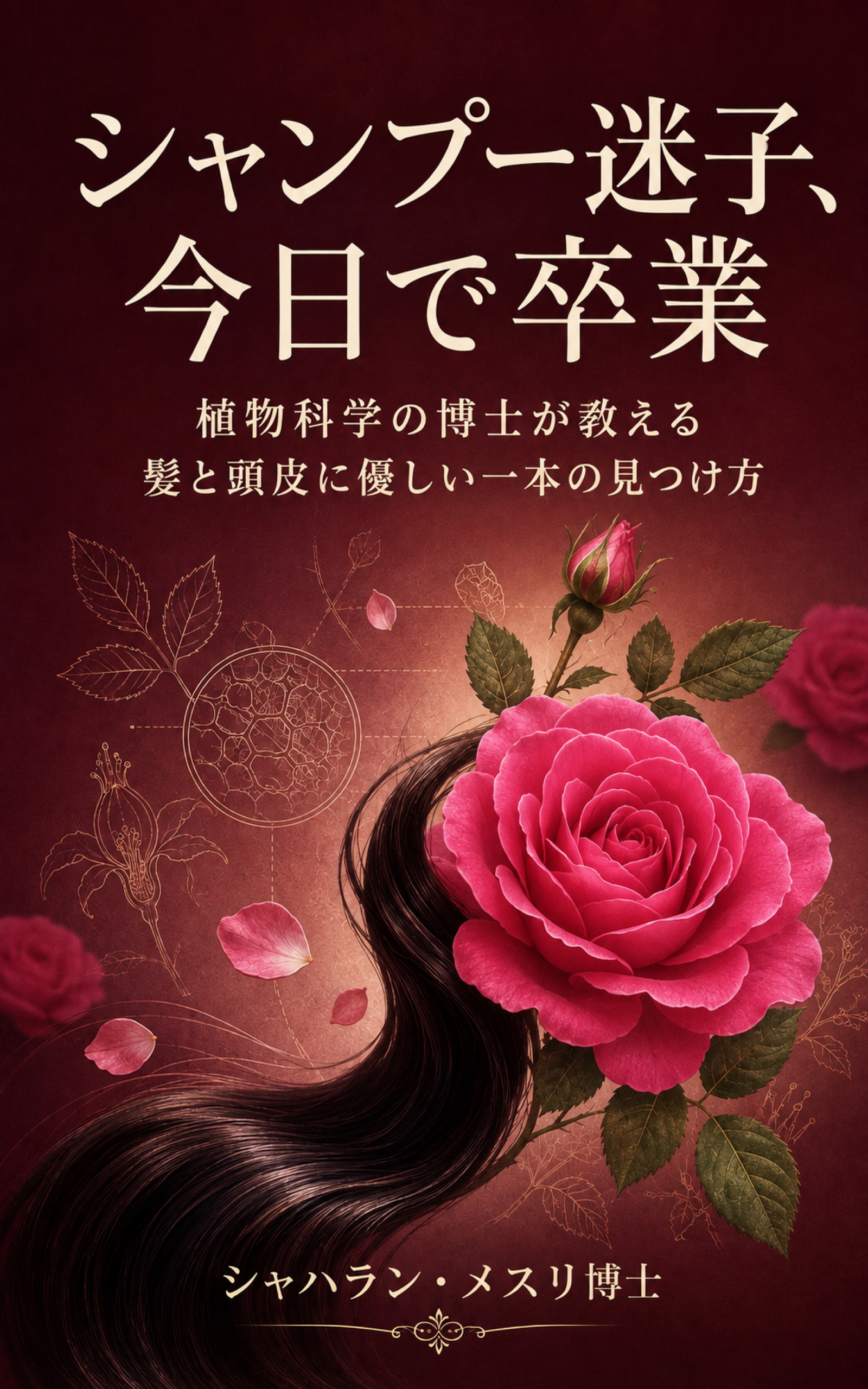 JAPANESE BOOK
WHY SHAMPOO SCIENCE
Expensive, natural, popular—none of these labels alone can tell you whether a shampoo suits your hair and scalp.
Shampoo Science does not prescribe a particular product. It helps you understand labels, basic hair and scalp concepts, and the changes you observe after use.
FIVE LENSES
Rather than sorting ingredients into a simple “good” or “bad” list, consider their purpose, the whole formula, and how you use it.
Start with the base of the formula and the ingredients responsible for cleansing. Look at the formulation as a whole instead of judging it by one highlighted ingredient.
Consider more than foam or the immediate feeling of cleanliness. Frequency, amount, rinsing, and the current condition of your hair and scalp all matter.
“Plant-derived” is not a complete answer. Ask why an ingredient is included and what role it plays in the overall product.
Understand how a product maintains quality and how fragrance shapes the experience. Sensitivity varies, so your own observations remain important.
Look beyond the wash itself. Dryness, friction, manageability, and scalp discomfort after washing can all inform your next decision.
OBSERVE BEFORE YOU DECIDE
If you change several parts of your routine at once, it becomes difficult to tell what made a difference. Keep the comparison small and put safety first.
Note dryness, itching, oiliness, friction, or other relevant observations before switching.
Avoid large changes in amount or washing method while you are observing a new product.
Discontinue use if you experience a strong reaction. Seek appropriate medical advice if symptoms persist.
The goal is not to keep searching for a universal shampoo.
It is to understand your own hair and scalp.
INSIDE THE JAPANESE BOOK
An explanatory English rendering of the Japanese title 『シャンプー迷子、今日で卒業』. The book itself is currently presented and sold in Japanese.
View on Amazon JapanSTART CHOOSING FOR YOURSELF
Instead of memorizing advertising claims, learn to look at ingredients, context, and your own observations. The Japanese book is a place to begin.
View the Japanese bookThis website and the book provide general educational information only. They do not offer diagnosis, treatment, or individualized product recommendations. If you have symptoms or persistent discomfort, consult an appropriate healthcare professional.